01
Dose calculation
Instantly calculates the syringe units needed for the selected peptide dose.
Peptide dose: Select dose
Draw syringe to: Select values

Your vial contains: Select values
Concentration: Select values
Calculator Features
This peptide dosage calculator combines peptide reconstitution math, syringe unit conversion, concentration estimates, and vial dose calculations in one simple tool.
Instantly calculates the syringe units needed for the selected peptide dose.
Shows the calculated syringe draw level using a visual syringe fill indicator.
Allows both preset peptide values and manual custom entries for dose, strength, and water.
Recent Articles
October 9, 2026
·9 min read
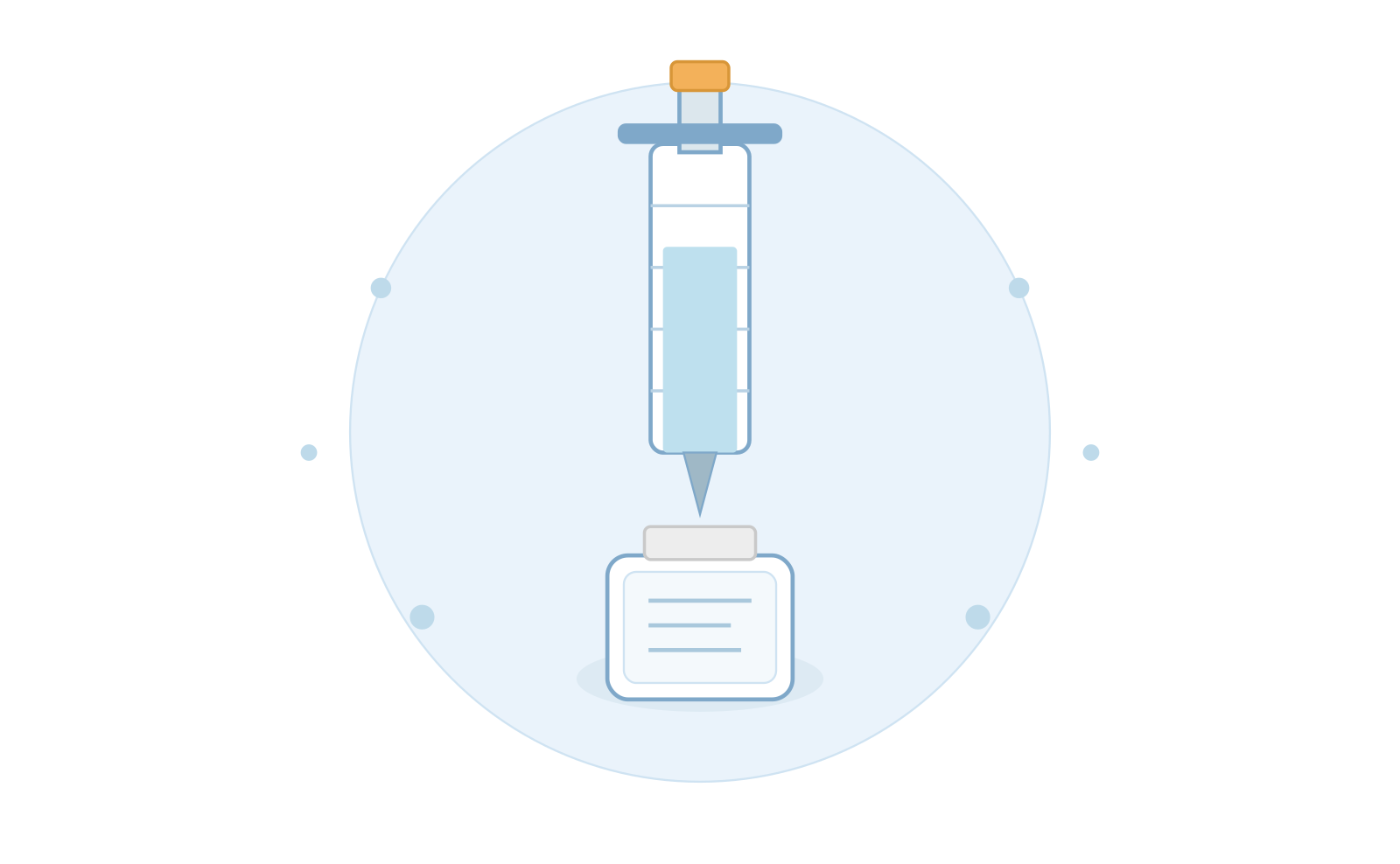
Getting peptide dosage wrong is one of the most common (and costly) mistakes in reconstitution. This guide breaks down exactly how a peptide calculator works, the formulas behind it, and a step-by-step walkthrough of reconstituting peptides correctly — so every dose you draw is accurate.
Read Article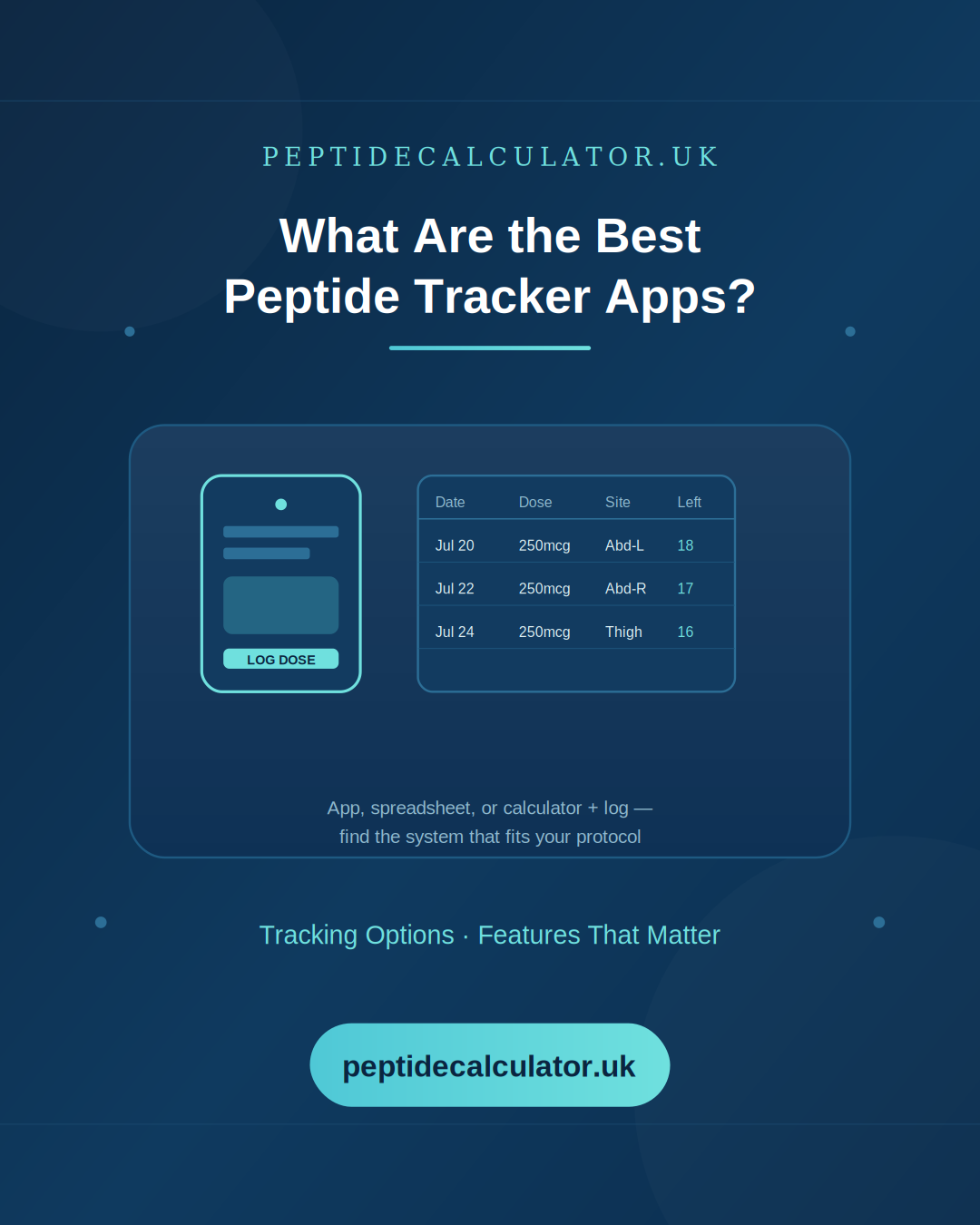
October 3, 2026
·6 min read
Once you're managing more than one peptide, memory stops being a reliable tracking system. This guide covers what to look for in a peptide tracker — app, spreadsheet, or calculator-plus-log — and the features that matter most.
Read Article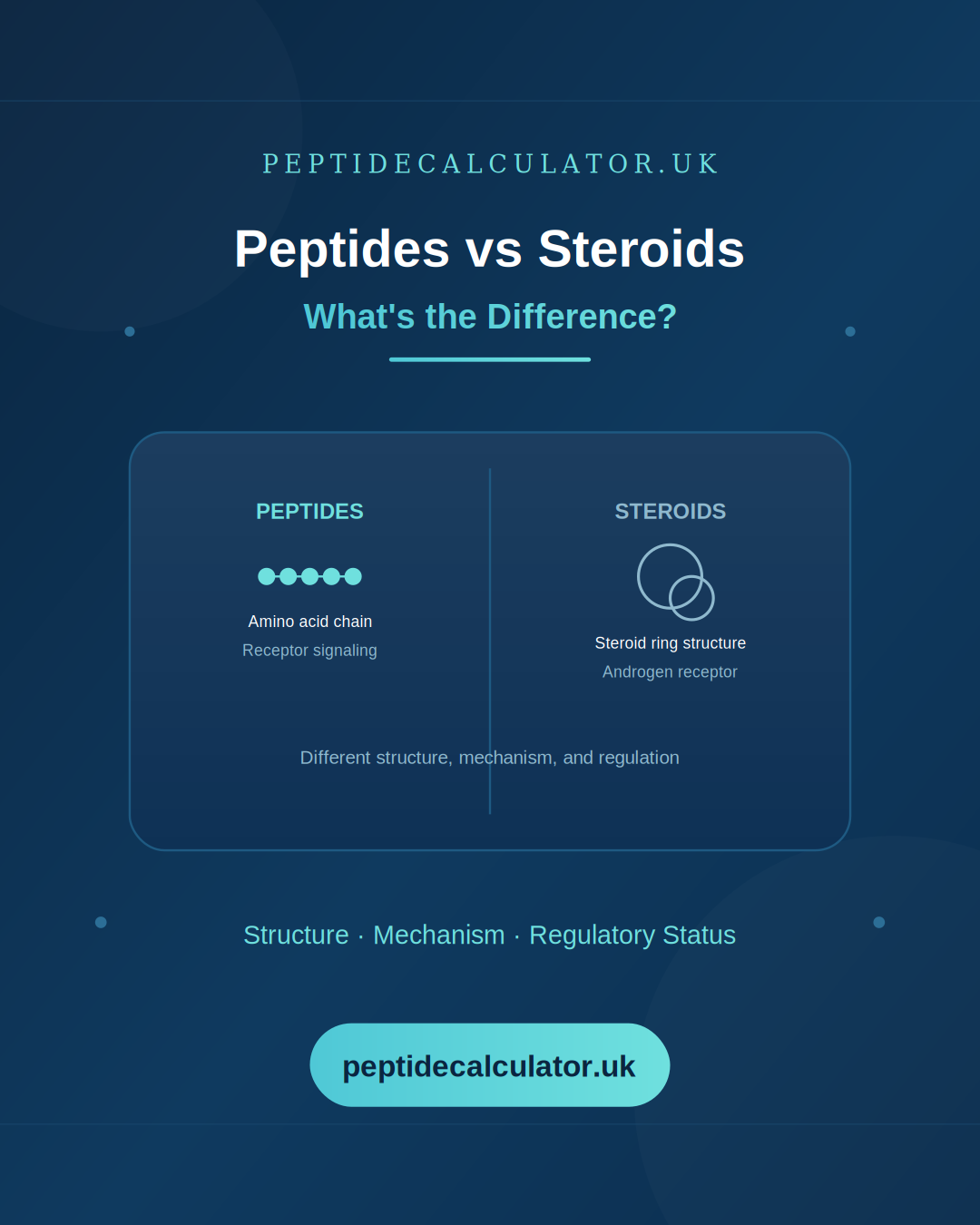
October 3, 2026
·5 min read
Peptides and anabolic steroids are frequently mentioned together in discussions about fitness, recovery, and performance, but they are fundamentally different classes of compounds. Understanding these differences is essential for anyone researching peptide science or learning about how these molecules work. This educational guide explains what peptides are, what anabolic steroids are, and how they differ in molecular structure, biological mechanisms, administration methods, and regulatory status. It also explores why these compounds are often discussed together, highlights common misconceptions, and answers frequently asked questions to help readers better understand the science behind each category. Whether you're new to peptide education or looking to expand your knowledge, this guide provides a clear overview without oversimplifying the topic. You can also use the free tools available at PeptideCalculator.uk to calculate peptide reconstitution, dosage conversions, syringe units, and other peptide-related calculations while exploring our growing library of educational resources. This article is intended for general educational purposes only. It is not medical or legal advice. Always consult a qualified healthcare professional and refer to applicable regulations before making healthcare decisions.
Read ArticleFAQ
Find answers to common questions about peptides, peptide reconstitution, mixing ratios, concentration, and syringe-based dose calculations.
Peptides are commonly discussed for goals such as skin support, muscle development, weight management, recovery, hair care, bone support, and hormone-related wellness.
Peptides often act like signaling messengers that can influence functions linked to healing, tissue repair, metabolism, and muscle-related processes.
To work out a peptide dose, you need the vial strength, the amount of water added, and the dose you want to draw. The calculator uses these values to estimate syringe units and concentration.
The water amount depends on the concentration you want to create. Many users work with bacteriostatic water, and the final mL can vary based on the peptide and dosing plan.